Annette Summers Engel
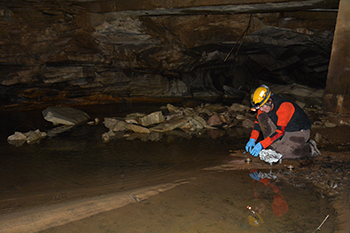
Annette Engel conducts interdisciplinary research that includes cave and karst aquifer evolution and speleogenesis, the role of natural organic matter in karst, geochemical controls on microbial metabolism, oil degradation and trajectories following environmental disturbances, the biodiversity of cave systems and coastal marine habitats, and symbiotic associations between bacteria and clams, invertebrates, and alligators. Her research falls broadly within the discipline of geomicrobiology, the study of the interactions between microorganisms and their geological and geochemical surroundings. Research involves a range of classical inorganic and organic geochemistry, stable isotope geochemistry, and molecular genetics methods within a microbial systems biology approach.
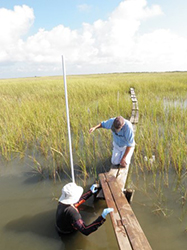
Much of the instrumentation is available in Engel’s laboratory. To quantify inorganic and organic compounds in water and gases, she applies basic wet and dry chemistry methods, ion chromatography, UV-Vis and fluorescence spectroscopy, Fourier transform infrared spectroscopy, gas chromatography, gas chromatography-mass spectrometry, and inductively coupled plasma mass spectrometry. She also uses X-ray diffraction and X-ray absorption spectroscopy using synchrotron radiation to understand mineralogical and elemental composition of natural materials. She uses stable isotope geochemistry, specifically of carbon, nitrogen, and sulfur, to characterize microbial signatures in water and sediment. For systems biology, she applies genomics and bioinformatics approaches that include DNA amplification protocols for PCR and quantitative PCR, and different gene sequencing methods, including next-generation high-throughput 454 and Illumina platform sequencing technologies to obtain DNA-based gene sequences and metagenomes (“who is there?”) and also RNA-based transcriptomes (“what are they doing?”) from environmental samples. To investigate metabolic potential directly from a sample, she routinely uses classical culturing methods and enzymatic assays. She also examines samples microscopically using gene probes for a full-cycle approach, where she can obtain genetic information and then probe material with specially designed probes to target specific microbes.”