News & Events
News

Hiking canyons can be dangerous when storms hit – what you need to know to stay safe
Anner Paldor, University of Tennessee Hiking a picturesque valley or climbing a craggy gorge are some of the most exhilarating experiences in nature. As a geologist, I have hiked and climbed some of the most intense terrains in the world, including in the Andes, Middle Eastern deserts, the Balkans and the Appalachians. I am particularly […]

Green roofs can help cool cities in the summer heat, but building them is only the first step – many don’t survive
Taylor Wishart, University of Tennessee As summer temperatures soar across the United States and Europe, cities are being forced to confront the difficult reality that they’re getting dangerously hot. Record-breaking heat waves strain power grids, send people to cooling shelters and can make the top floors of some apartment buildings unlivable. One way to help […]

In Memoriam: Kula C. Misra
With great sadness, the Department of Earth, Environmental, and Planetary Sciences marks the loss of Professor Emeritus Kula C. Misra, who passed away on June 23, 2026, at the age of 89. Kula was a valued colleague who served as a faculty member at UT for more than three decades. He received a BS degree […]



Jeff Moersch in ‘The Conversation:’ What is below Earth, since space is present in every direction?
Our solar system is mostly arranged along one plane in space, as in this not-to-scale artist’s diagram. NASA/JPL, CC BY Jeff Moersch, University of Tennessee Curious Kids is a series for children of all ages. If you have a question you’d like an expert to answer, send it to CuriousKidsUS@theconversation.com. What is below Earth, since […]


EEPS Professor Interviewed on Dinosaur Mummies
Teaching Associate Professor Stephanie Drumheller-Horton’s expertise on dinosaur mummification has led to several recent interviews on new findings of soft tissue structures preserved in the fossil record. In National Geographic she discussed research into how these fossils are formed, including her work on a North Dakota Edmontosaurus specimen. Drumheller-Horton also was interviewed by The New […]


Research Takes UT Faculty and Students to the Extreme
The mysteries of science entice UT research faculty to seek new discoveries in some of the world’s most extreme environments. Their fascinations might lead them to probe the ice fields of Antarctica to expand interplanetary possibilities, scoop up remnants of ancient undersea volcanoes to predict future impact, or break open the subatomic world to better understand how everything is put together.

Three NASA Grants Support UT Mars Research
With funding from NASA, three projects in the Department of Earth, Environmental, and Planetary Sciences (EEPS) aim to expand our knowledge of Mars through research on this planet. Associate Professor Anna Szynkiewicz is the principal investigator on two projects and co-investigator on the third, with nearly $900,000 in funding over three years for the University […]

Molly Colleen McCanta in ‘The Conversation’: Seafloor sediment reveals previously unknown volcanic eruption 520,000 years ago in south Aegean Sea
Researchers obtained cylindrical core samples from almost 3,000 feet – nearly a kilometer – within the seafloor. Erick Bravo/IODP Molly Colleen McCanta, University of Tennessee “Core on deck!” For two months, whenever I heard that cry, I would run up to the deck of the JOIDES Resolution to watch the crew pull up a 30-foot […]
Rockfall Gives UT Geology Class Something to Talk About
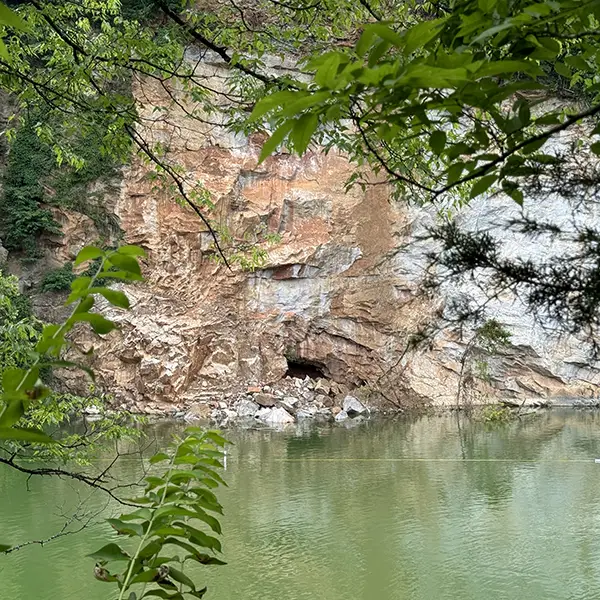
First-year students studying geology in the Department of Earth, Environmental, and Planetary Sciences (EEPS) this fall will get a first-hand look at a geological event that took Knoxville by surprise this spring.

Geology Club Witnesses Totality
From Saturday, April 6 to Monday, April 8, the UT Geology Club, the student association of the Department of Earth, Environmental, and Planetary Sciences, traveled to East Prairie, Missouri, to observe the totality of the 2024 total solar eclipse.
Environmental Core Reflected In Departmental Name Change
As tectonic plates shift over time, so does scientific focus evolve for researchers chronicling the forces that shape the Earth and other planets.
Faculty Recognized for Excellence in Advising, Research, and Teaching
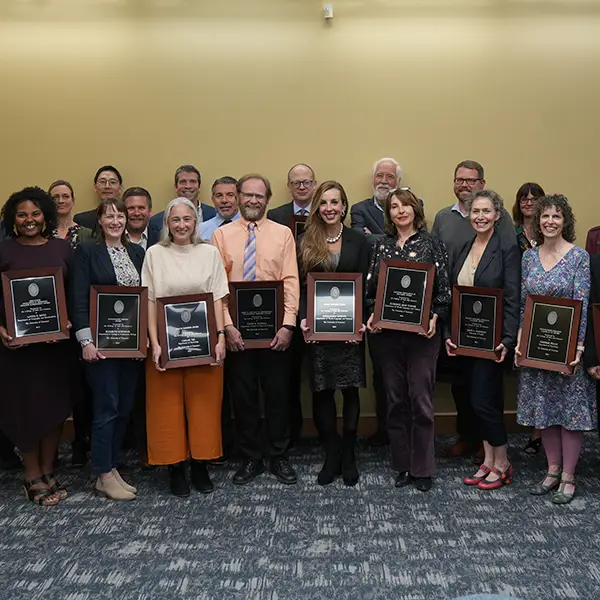
During the 2023 UT College of Arts and Sciences Faculty Convocation, EEPS faculty received awards for excellence in advising, research, and teaching.

Ashley Ramsey, Geoscientists and Alumna
I serve as a senior project manager at Atlantic Coast Consulting, Inc., located in Roswell, Georgia. My journey in geology started with a BS degree in geological science from Baylor University (’15), followed by an MS in Earth and Planetary Sciences from UT (’18).

Lauren Pinkard Receives Jimmy Walls Award
Lauren Pinkard is an undergraduate whose impact is felt not only within the department but also in the city of Knoxville. As an environmental studies major with a minor in sustainable landscape design, her passion for science is a defining thread in her academic and professional journey.

McCanta Explores Volcanic History with an Eye to the Future
Volcanoes seem to make frequent headlines in recent years. Hunga-Tonga Hunga Ha’apai, in Tonga, erupted in a massive explosion in 2022. Hawaii’s Kilauea sent rivers of lava flowing multiple times throughout 2023. This year, the southern Icelandic town of Grindavik is under threat from an ongoing series of eruptions.

Huang & Wang Published in ‘The Conversation’
For many years, scientists have predicted that many of the elements that are crucial ingredients for life, like sulfur and nitrogen, first came to Earth when asteroid-type objects carrying them crashed into our planet’s surface.

Paque (’79) honored with Philanthropy Award by the college
Julie Paque has had an accomplished record as a research scientist at Caltech and elsewhere. Recently, the college recognized her long-term supporter of EPS.

Arya Udry, Geoscientist and Alumna
Arya Udry’s (PhD '14) also received the EEPS Young Alumnus Award in 2021. Udry’s research focuses on planetary igneous petrology, including Martian petrology to better understand...

Jake Alexander, Geoscientist and Alumnus
Jake Alexander (MS '20) wrote his thesis on the relationship of deep- and shallow-water facies of the carbonate rocks in the Archean Transvaal Supergroup in South Africa.

Constance Cooper
Braided rivers, and their terminal deltas, played a critical role in clastic terrestrial deposition prior to the Devonian. After which, rooting land plants profoundly impacted fluvial systems by stabilizing channels, this facilitated a transition to abundant meandering rivers.

Ethan Sweet
All life on Earth depends on the Critical Zone, which includes plants and trees, soil, and the subsurface, including groundwater. Research in the Critical Zone examines how disturbances and climate change affect ecosystem services and energy, food, and the water cycle.

Jake Perez
Doctoral student Jake Perez is using fieldwork in the high Arctic and supercomputer-based simulations to better understand how thawing permafrost will influence the Earth’s carbon cycle. Permanently frozen soils, or permafrost, are rapidly thawing in the Arctic.

Hannah Williams
Access to green spaces in the outdoors is a key resource for human mental and physical wellbeing. Knox County has almost 300,000 acres of urban tree cover and other vegetation, with 64% of the land area in Knoxville being vegetation.
Julian Nosarzewski
So, what do you do when you start college in a pandemic and want to get involved in research? Julian Nosarzewski is a sophomore undergraduate who is majoring in geology, minoring in Portuguese, and has a deep interest in the evolution of life and environments on Earth.


Michael Neton (M.S. 1992)
Michael has recently worked as a qualified drilling inspector for Bauer Foundation Corporation on remediation of the Center Hill Dam in Tennessee.
Phillip Derryberry (M.S. 2011)
After a few years in the oil industry, Phillip is now working in Knoxville for GEOServices LLC, consulting on environmental projects.
Mark Miller (B.A. 1980)
Mark has been an R&D scientist for AquaShield, Inc. in Chattanooga since 2005.
Rhiannon Mayne (PhD 2008)
Rhiannon is an Associate Professor at Texas Christian University and was recently awarded the Oscar and Juanita Monnig Chair of Meteortics and Planetary Science.
Alyssa Bell (MS 2007)
Alyssa received a PhD in paleontology from the University of Southern California and is now a postdoc at the LA County Museum.

Peter Knappett (PhD 2010)
Professor McKay visited Peter Knappett recently at Texas A&M where Peter is an Assistant Professor in the Department of Geology and Geophysics.
Abigail Harmon Receives Cave Conservancy Foundation Undergraduate Fellowship Award
Abigail Harmon receives Cave Conservancy Foundation Undergraduate Fellowship Award.

Widow of UT geology professor, Jimmy Walls, make major gift to UT
Nancy Walls, widow of UT geology Professor, Jimmy Walls, has made another major gift to UT.

Otto Kopp Summer Research Scholars (Summer 2020)
Otto Kopp Research Awards honor the memory of former EPS professor Otto Kopp and his dedication to undergraduate research.

Engel Coauthors Study on Healthy Coastal Ecosystems
Annette Engel coauthored a study published in the American Society for Microbiology’s journal mSystems.

Alexander receives Houston Geological Society scholarship
Jake Alexander, a graduate student in EPS, received the Warren L. and Florence W. Calvert Memorial Scholarship from the Houston Geological Society.

The Universe of Clay
An exhibit will explore geological processes involved in the formation of clay minerals on Earth and Mars.

Chaotic Early Solar System Collisions Resembled ‘Asteroids’ Arcade Game
One Friday evening in 1992, a meteorite ended a more than 150-million mile journey by smashing into the trunk of a red Chevrolet Malibu in Peekskill, New York. The car’s owner reported that the 30-pound remnant of the earliest days of our solar system was still warm and smelled of sulfur.

Hap McSween Named to National Academy of Sciences
Harry Y. “Hap” McSween Jr., has been elected to the National Academy of Sciences.

Engel Part of NSF Grant to Study Lava Tube Biodiversity on Hawai’i Island
Annette Engel, professor in the UT Department of Earth and Planetary Sciences is part of team studying lava tube biodiversity on Hawai’I Island.

Doctoral Student Joins Prestigious Research Expedition
Doctoral student Jesse Scholpp embarked on a prestigious research expedition on the JOIDES Resolution (JR) vessel in Expedition 391.

Modeling Methane
Methane – the main component of natural gas – is the latest greenhouse gas targeted by climate science researchers.

Dinosaur Mummy Provides New Insight into Soft Tissue Fossilization
In 2008, an Edmontosaurus “mummy” arrived at the North Dakota Geological Survey where lab technicians began the process of removing sediment and preparing the specimen for paleontologists to investigate.

Hatcher Honored by AAPG
Robert Hatcher, distinguished professor emeritus in the Department of Earth and Planetary Sciences, was honored with the 2023 Honorary Member Award from the American Association of Petroleum Geologists (AAPG).

Shichun Wang in ‘The Conversation’: Will the Earth Last Forever?
Everything that has a beginning has an end. But the Earth will last for a very long time, and its end will come billions of years after anyone who is alive here now is gone.

Shichun Wang in ‘The Conversation’: How has the inside of the Earth stayed as hot as the Sun’s surface for billions of years?
Our Earth is structured sort of like an onion – it’s one layer after another. Starting from the top down, there’s the crust, which includes the surface you walk on; then farther down, the mantle, mostly solid rock; then even deeper, the outer core, made of liquid iron; and finally, the inner core, made of solid iron, and with a radius that’s 70% the size of the Moon’s. The deeper you dive, the hotter it gets – parts of the core are as hot as the surface of the Sun.

EPS Advisory Board Fall 2020 Meeting
Members of the EPS Advisory Board (AB) met via Zoom on Friday November 6, 2020.

G. Shanmugan Honored
On October 28, 2020, Springer Journal of Palaeogeography (JoP) has announced the top journalism award to G. Shanmugam (’78).

Drumheller Publishes Research on Cannibalism in Dinosaurs
Big theropod dinosaurs such as Allosaurus and Ceratosaurus ate pretty much everything – including each other, according to a new study.
Engel Receives Academic Outreach Award for Research
Professor Annette Engel received the Academic Outreach Award for Research and Creative Activity.

Two Professors Named AAAS Fellows
Annette Summers Engel and Christopher M. Fedo named fellows of the American Association for the Advancement of Science (AAAS).
Post-Doctoral Teaching Associate in Environmental Hydrogeology
The Department of Earth and Planetary Sciences invites applications for a full-time, Post-doc TA position in Environmental Hydrogeology.
Professor to Unseal Sample of Moon Rocks from Apollo 17
Researchers from all over the country will soon be studying moon rocks that NASA has never opened before, and some of the samples will be analyzed at the University of Tennessee, Knoxville.

Study: Infamous ‘Death Roll’ Almost Universal Among Crocodile Species
The iconic “death roll” may be more common among species than previously believed, according to a new study published in Ethology, Ecology & Evolution and coauthored by Stephanie Drumheller-Horton.
Faculty Position in Isotope Geochemistry and Geochemistry
We invite applications for a 9-month, tenure-line position in Isotope Geochemistry and Geochemistry to be hired at the rank of Associate Professor.

SIS Student Rose Borden Selected as ESIP Community Fellow
Rose Borden has been selected as an Earth Science Information Partners Community Fellow.
Emeritus Professor Don Byerly passes away
Emeritus Professor Don Byerly passed away last week. He was an alumnus (MS 1957, PhD 1966) and a faculty member, who did a lot for our department, retiring in 2000 after a long career.


GSA Dedicates Book in Hatcher’s Honor
The Geological Society of America (GSA) dedicated Memoir 213 to Robert Hatcher, distinguished professor in the Department of Earth and Planetary Sciences, in honor of his career studying the geology of the Southern Appalachians.

Bill Ross Receives Alumni Appreciation Award
Professor Larry McKay presented Ross with a special Alumni Appreciation Award.

Study: Moon’s Crust Underwent Resurfacing After Forming from Magma Ocean
The Earth’s Moon had a rough start in life. Formed from a chunk of the Earth that was lopped off during a planetary collision, it spent its early years covered by a roiling global ocean of molten magma before cooling and forming the serene surface we know today.
EPS Graduate Student and Recent Alumna Collaborate on Darwin Day Paper
Charles Darwin is best known for his contributions to the science of evolution.


Postdoc Leads New Phase of NASA’s Pluto, Spitzer Telescope Observations
NASA scientists will get a deeper look at Pluto thanks to a new round of observations being led by a UT postdoctoral student.

