Investigating Planetary Processes
Investigating Planetary Processes
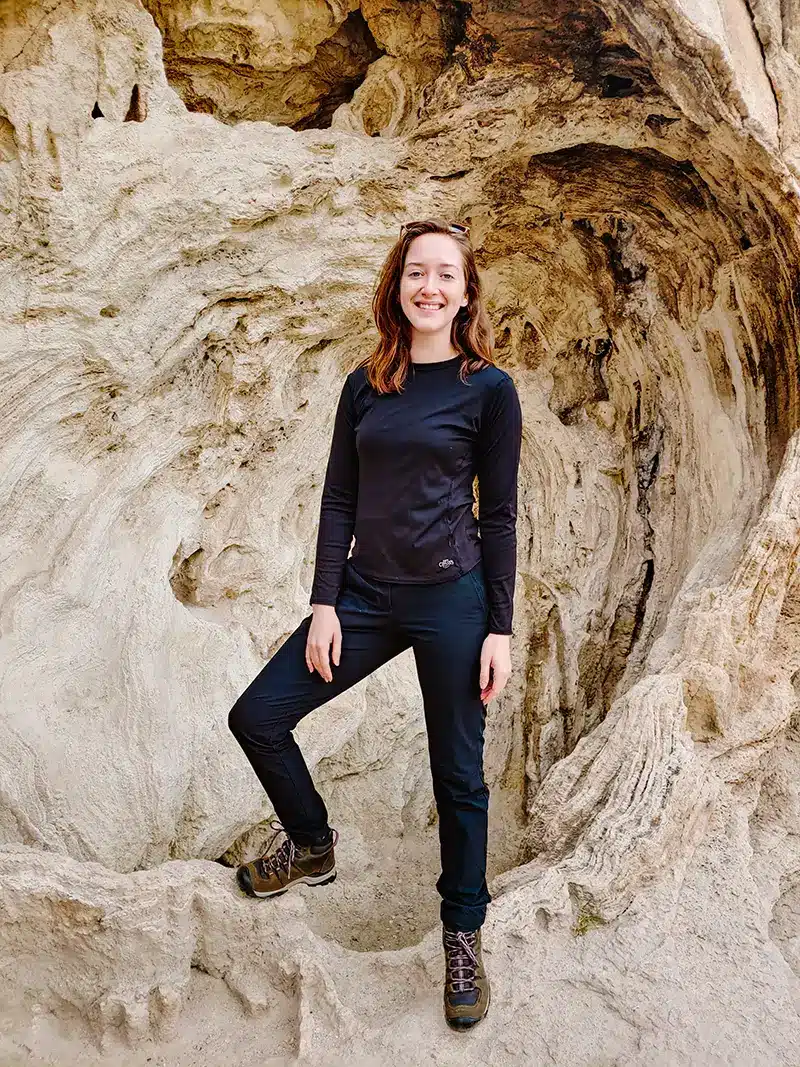
Sara Shields has developed the skills to be not only a scientist but also a technical writer, lab manager, and mentor.
Intrigued by exploring glow worm caves in Waitomo, New Zealand, Sara Shields decided to study geological sciences. “The expansive cave system and unique organisms left me with many questions about formation processes and the modern conditions that allowed these critters to thrive,” she said.
Shields came to UT as a graduate student to pursue her goal of investigating geologic problems not only on Earth but other planets as well. The fifth-year doctoral student was drawn to the university by Associate Professor Anna Szynkiewicz’s research into martian sulfur cycling and mineralogy using terrestrial analog work.
“Through my work with Dr. Szynkiewicz, I have been able to hone my skills as a scientist, technical writer, lab manager, and mentor,” she said.
“The laboratory facilities and research staff at UT are exceptional and have also been central to my career development,” said Shields, helping her develop a technical toolbox with the skills to work on a multitude of surface and subsurface processes.
From Antarctica to Mars
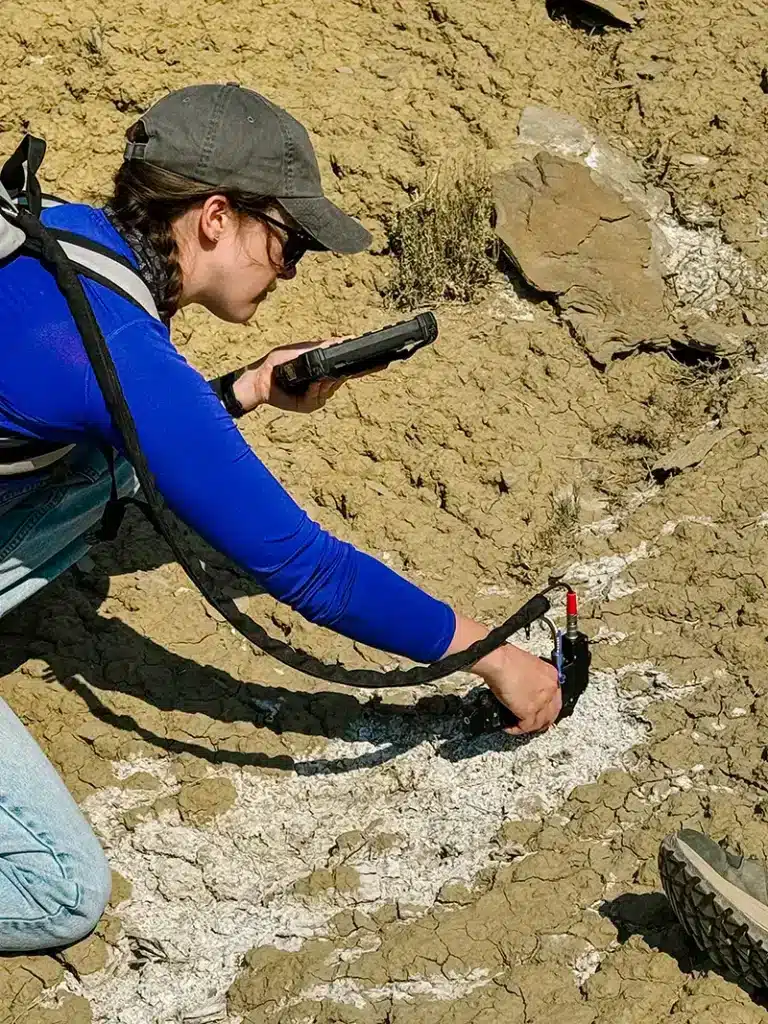
Shields is investigating the history of marine transgressions, biogeochemical cycling, and sources of sulfate in the McMurdo Dry Valleys, Antarctica, using stable isotope analysis of archived sediment and bedrock samples from the Dry Valley Drilling Core project. She’s also studying salt and clay formation processes in the semi-arid Rio Puerco Watershed of New Mexico using stable isotopes and mineralogy. “The latter is a terrestrial analog project that is particularly important to progress our understanding of sulfate formation and past climate conditions on Mars,” she explained.
In addition to her research, Shields has participated in the NASA International Astrobiology Summer School, Rapid Access Ice Drill Science Planning Workshop, HI-SEAS analog astronaut program, and the NASA SCoPE affiliate program.
“All of these experiences have expanded my understanding of planetary processes on Mars and icy ocean worlds, increased my ability to develop successful science missions, and helped me understand how to perform successful outreach events,” she said. “In particular, the outstanding scientists and professionals I met during these experiences have shown me the importance of building diverse and cross-disciplinary collaborations.”
Her work at UT has been supported by the Lawrence Taylor and UT Earth and Planetary Science Department Graduate fellowships, plus a Space Grant Research Assistantship and and a NASA Solar System Workings grant awarded to her advisor, Szykiewicz.